A new way to measure Executive Function
A smarter way to understand cognition
A smarter way to understand how the brain is working after illness or injury
When someone is recovering from a stroke or another serious illness or injury, the challenges they face are not always visible.
They may be able to walk, talk or move independently, but still have difficulty planning what to do next, solving problems or making decisions safely.
These skills are known as executive function – essentially, the brain’s management system. They help us organise our day, make decisions, solve problems and complete everyday activities such as shopping, cooking, working and driving.
For occupational therapists, understanding how well these skills are working is an important part of helping patients safely return to life outside hospital.
Thanks to support from a Charlies Foundation for Research Bright Ideas Grant, occupational therapist and clinician researcher Toni Heinemann, has been investigating a new digital way to assess executive function that could make this process quicker and easier for patients.
Bringing assessment into the virtual world
The research is investigating the Oxford Digital Multiple Errands Test (OxMET), a digital assessment that places patients in a virtual shopping scenario. Rather than completing a lengthy traditional assessment, patients are asked to navigate the virtual environment and complete a series of tasks. How they approach the activities provides occupational therapists with information about skills such as planning, organising and problem-solving.
Toni is assessing whether the OxMET is accurate and reliable enough to be used in Australian hospitals, as well as whether patients and clinical staff find it easy and acceptable to use.
While the final participant numbers for the validity study are still being collected, the early feedback has been encouraging with patients responding positively to the digital assessment, and clinical staff have already expressed interest in using it.
For patients, a shorter assessment could mean less time spent completing tests during an already challenging hospital stay. For occupational therapists, it could mean more time to work directly with patients and support more people during their recovery.
Helping patients with the challenges we can't always see
Cognitive difficulties can be a hidden consequence of illness or injury.
If these difficulties are not identified, a person may leave hospital without fully understanding the support they need to safely manage everyday life.
“Cognition is one of those hidden symptoms and something we know impacts many areas of someone’s life,” Heinemann explains.
By identifying difficulties with executive function earlier, occupational therapists can better understand a patient's needs and recommend appropriate therapy, rehabilitation and ongoing support.
The long-term goal is for the digital assessment to become part of routine occupational therapy screening across hospital, rehabilitation and community care for people who may be experiencing difficulties with executive function.
A challenge that keeps the brain working
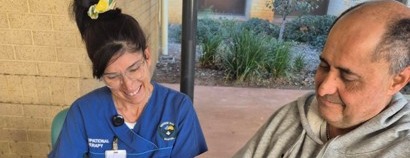
One patient who took part in the research was Carlos, who was undergoing rehabilitation following a stroke at Osborne Park Hospital who described it as a challenge and a good way to keep his brain working.
His experience is a reminder that research does not always have to involve complicated procedures or uncomfortable tests. Sometimes, innovation can mean finding a simpler, more engaging way to understand what a patient needs.
From a Bright Idea to a bigger research career
For Toni, the impact of the Bright Ideas Grant extends beyond this individual project.
After more than 15 years working as an occupational therapist across Sir Charles Gairdner Hospital and Osborne Park Hospital, the funding provided an opportunity to build research skills and confidence while continuing to work clinically.
That experience helped lay the foundations for a significant next step. At the beginning of this year, Toni was awarded a $320,000 FHRI and Charlies Foundation Clinician Researcher Training Grant, supporting the continued development of their research career and skills.
The Bright Ideas project provided valuable experience in coordinating research – experience that became an important part of their successful application for the larger grant.
“This project funding was integral in the progression of a career path for me to becoming a clinician researcher.”
Your support helps turn bright ideas into better care
Research can begin with a small idea: a clinician noticing that something could be done differently and asking, Could there be a better way?
For Toni, the Bright Ideas Grant provided the opportunity to turn that question into a research project, build valuable skills and take the next step towards a career combining clinical care and research.
The potential benefits could ultimately reach far beyond this one project – helping occupational therapists identify hidden cognitive difficulties earlier, give patients the right support and help more people return to the activities that matter to them.
Your support helps clinicians turn bright ideas into research, and research into better care for patients and their families.